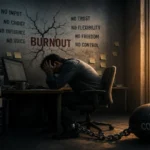

What scares me most isn’t the employee who speaks up.
It’s the employee who has stopped speaking up. Because that employee usually still sees the problems. They’ve simply decided it isn’t worth saying anything.
I think that’s one of control’s most dangerous consequences.
It doesn’t just create compliance.
It silences dissent.
Healthy Teams Disagree
Many leaders see disagreement as a problem. I see it as evidence of a healthy team. Healthy teams debate. Challenge assumptions. Ask uncomfortable questions. Push back on bad ideas. Not because they’re difficult. Because they’re trying to make the work better.
The absence of disagreement isn’t harmony.
It’s often fear.
The Challenger Disaster Didn’t Begin in Space
Most people think the Challenger disaster happened 73 seconds after liftoff.
I don’t.
I think it happened months earlier.
Engineers at Thiokol repeatedly warned that the shuttle’s O-rings could fail in cold temperatures. Roger Boisjoly even warned of what he called “a catastrophe of the highest order.”
The night before launch, engineers recommended delaying the mission. NASA pushed back. Schedule pressure increased. Political pressure increased. Management overruled the engineers. The launch proceeded.
Seventy-three seconds later, seven people were dead.
The investigation concluded that the failure wasn’t simply technical.
It was cultural.
The people with the most relevant knowledge weren’t ignored because they lacked expertise.
They were ignored because their dissent became inconvenient.
Most Organizations Don’t End in Tragedy
Thankfully, most companies don’t experience disasters on that scale. But they experience smaller ones every day. A security vulnerability no one mentions. A customer issue everyone notices. An unrealistic deadline nobody challenges. A flawed strategy everyone privately doubts.
The information exists.
The courage to say it doesn’t.
I’ve Seen It Happen
Years ago, I wrote a document explaining what I believed was fundamentally wrong with one of our processes. It wasn’t written to criticize people. It was written because I wanted the organization to improve.
I handed it to my manager. He read it carefully. Then he looked at me and said something I’ll never forget.
“Whatever you do, don’t show this to anyone higher than me.”
He wasn’t joking. Several people had recently lost their jobs after speaking up. He genuinely believed he was protecting my career.
Think about what that says about the culture. When telling the truth feels dangerous, silence becomes rational.
Research Calls This Organizational Silence
Researchers Frances Milliken and Elizabeth Morrison coined the term organizational silence to describe cultures where employees withhold concerns because speaking up feels unsafe.
What’s fascinating is that silence isn’t usually an individual choice. It’s collective. People watch what happens to others. When they see disagreement ignored, or punished, or ridiculed, they learn. Not because someone tells them to stay quiet. Because the culture teaches them.
Eventually silence becomes normal.
And once silence becomes normal, organizations stop learning.
Five Ways Leaders Protect Dissent
1. Thank people who disagree with you.
Even when you think they’re wrong.
Especially when you think they’re wrong!
2. Ask, “What am I missing?”
Every important decision has blind spots.
Invite people to help you find them.
3. Separate disagreement from disloyalty.
People who challenge your ideas aren’t necessarily challenging you.
4. Reward truth, not agreement.
The goal isn’t consensus.
The goal is better decisions.
5. Make it safe to be the lone voice.
The most important opinion in the room is often the one nobody wants to hear.
One Final Thought
Every organization says it wants honest feedback. Far fewer create environments where honesty feels safe.
The greatest danger isn’t that people disagree with you. The greatest danger is that they stop. Because when people stop telling leaders uncomfortable truth, leaders stop seeing reality.
Control doesn’t just silence one employee. It teaches an entire organization that staying quiet is safer than speaking up. And history has shown us, again and again…
That silence is far more dangerous than dissent.